ServicesNew Authority Truck Insurance
New Authority Truck Insurance in Denton
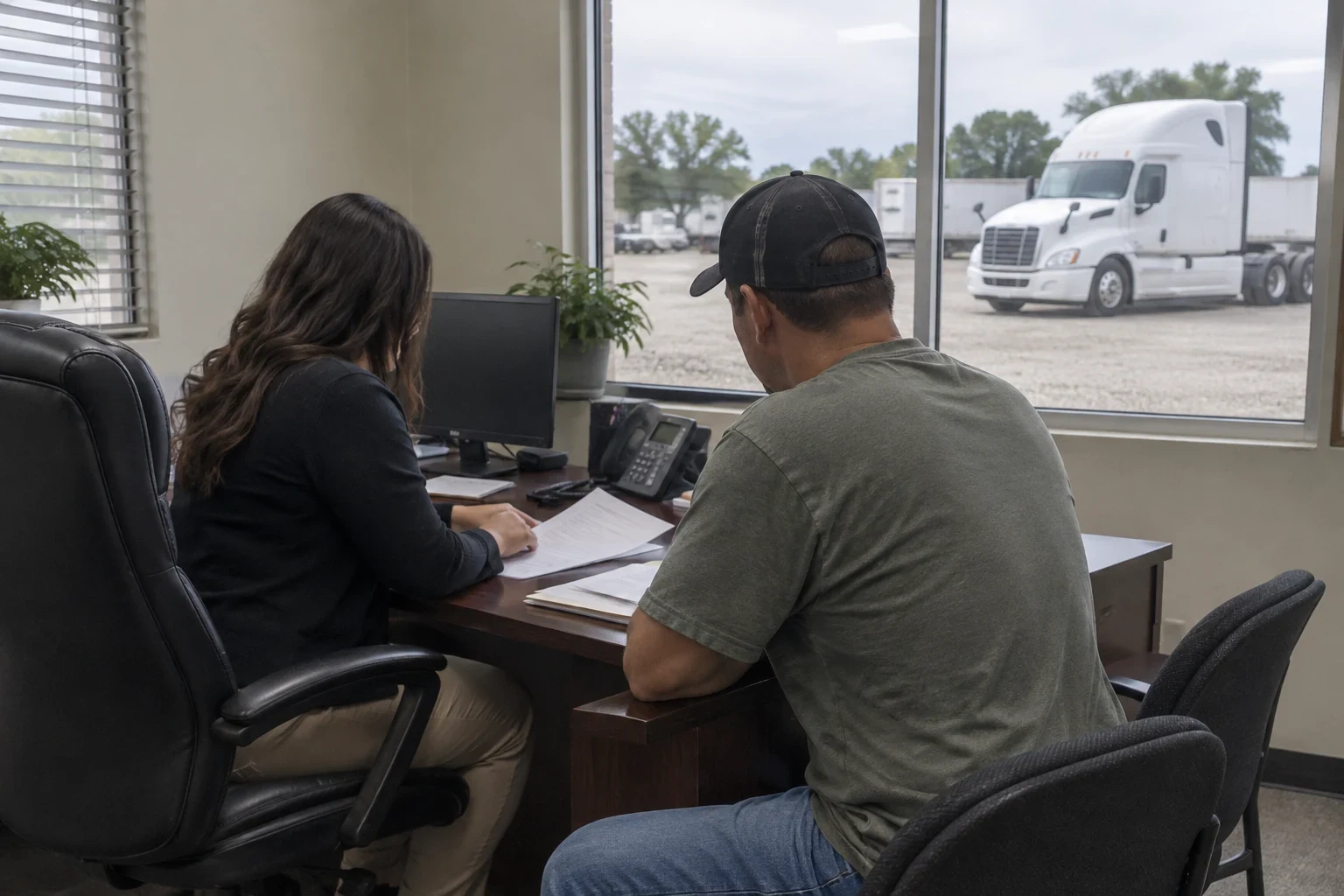
Your MC authority stays pending until the right insurance filing reaches FMCSA. We help new motor carriers get primary liability filed and line up cargo and physical damage coverage that brokers accept. We also set a premium you can carry through that first year on the road.
Getting your first policy right, not just filed
When you apply for a DOT number and MC authority, FMCSA will not activate your authority until an insurer files proof of liability coverage, usually on a BMC-91X. Texas intrastate carriers have a similar step with TxDMV. New authority truck insurance is the package that gets those filings done and covers your operation from day one: primary auto liability, plus the cargo and physical damage coverage most brokers and lenders ask for.
Underwriters see a new authority as an unknown, so the first year usually costs more than later years will. Our job is to keep the policy sized to the work you actually plan to haul. If you are coming off a lease with another carrier, we look at what you already carry, such as physical damage on a financed truck, and adjust it when that works instead of starting from scratch. When a fresh policy makes more sense, we tell you why.
We hold a license for property and casualty insurance, and our agency has been helping carriers around Denton for five years now. That time has taught us where a first policy tends to trip up a new carrier and how to head it off.
What your new authority coverage includes
Primary auto liability and the federal filing
This is the coverage FMCSA requires before your authority can go active. We place the policy, make sure the insurer sends the filing under your DOT number, and confirm it appears on your FMCSA record.
Motor truck cargo coverage
Most brokers will not load a truck without it. We fit the limit and exclusions to your freight, because reefer loads, flatbed steel and general dry van freight are rated very differently.
Physical damage for your truck and trailer
Pays for collision, theft, fire and similar losses to your own equipment. A financed truck needs this coverage, and the lender will ask to be named on the policy as loss payee.
Certificates of insurance
Your first broker or shipper will ask for proof before they hand you a load. We send certificates with the correct holder name and wording, so their carrier setup goes through on the first try.
Trailer interchange when you need it
Pulling another company's trailer under a signed interchange agreement puts that equipment on you. Trailer interchange insurance covers damage to it while it is in your hands, and we add it only when your work calls for it.
Signs it is time to call about new authority insurance
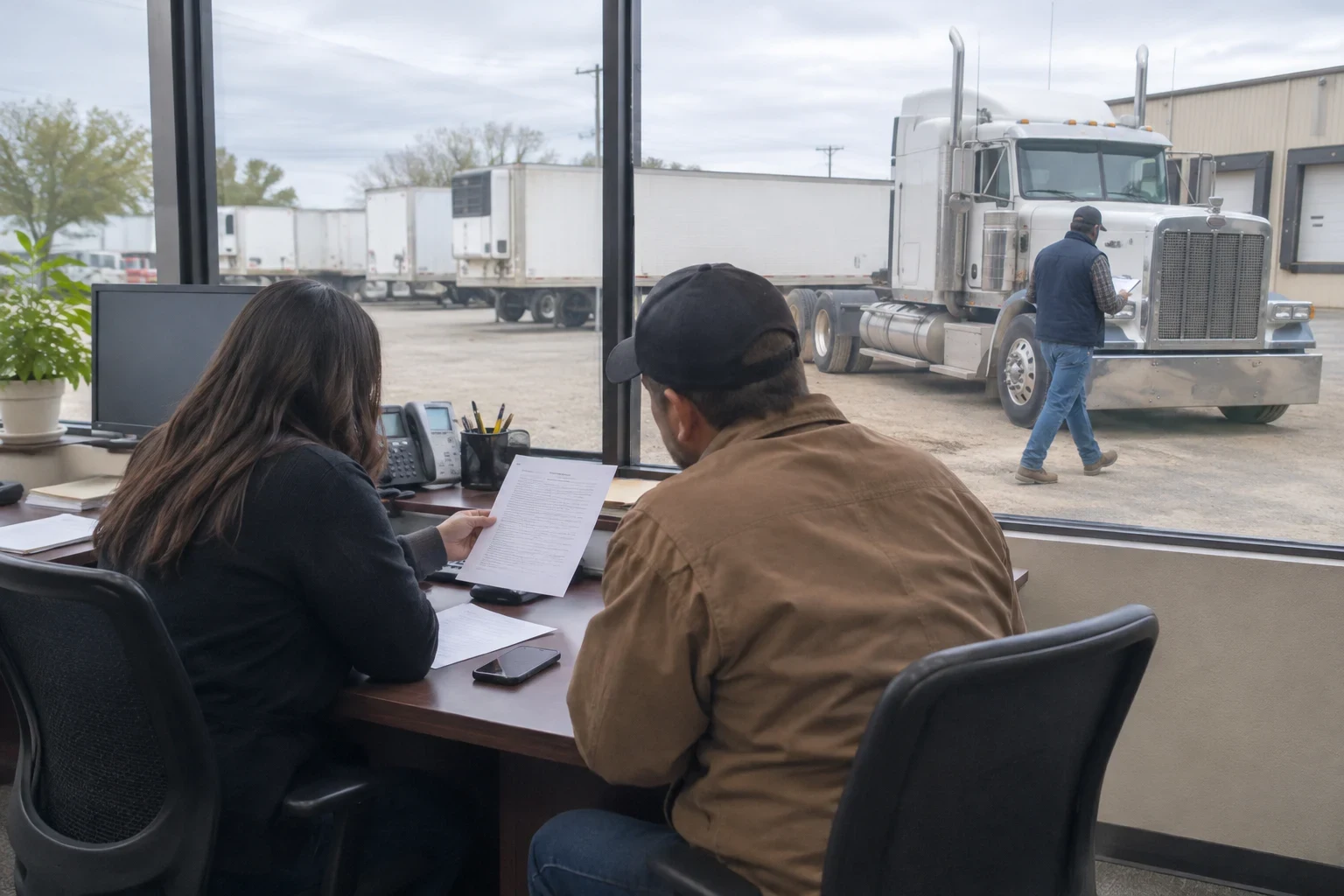
- Your MC application is pending
- FMCSA shows your authority waiting on insurance. Nothing moves until the filing is in, so this is the step to handle first.
- You are leaving a lease-on arrangement
- Your current carrier's insurance stops covering you once you run under your own authority. A bobtail policy alone will not satisfy the filing requirement.
- A broker rejected your certificate
- Limits too low, a cargo exclusion on the commodity they load, or the wrong certificate holder. These are usually fixable with an endorsement rather than a whole new policy.
- You just bought or financed a truck
- Your lender needs proof of physical damage coverage to release the truck.
- Your first renewal is coming up
- After a year of clean running, you have a record underwriters can price. Go over it with us so the policy does not simply roll over at the old rate.
How we set up your first policy
- 1
Talk through your operation
It starts with a conversation about your trucks, your drivers, the freight you plan to haul and your usual radius. We can do that on the phone, over video or in person at our office. Your CDL history and driving record carry a lot of weight for a new authority, so have them handy.
- 2
Review what you already carry
If you have physical damage, bobtail or an older policy from a previous business, we check whether any of it can be adjusted and kept. Holding on to what still works can trim the first premium.
- 3
Shop and explain the quotes
We bring your details to insurers that write new motor carriers. Then we sit down with you and go through every option in plain terms, covering what the limits are, how big the deductibles run, which cargo is excluded and how much is due up front.
- 4
Bind and file
Once you choose, we bind coverage and have the insurer transmit the federal filing to FMCSA. We watch your record until it posts, then send certificates to your brokers.
- 5
Stay in touch through year one
Add a truck, change a driver or start hauling a new type of load, and we update the policy so a claim is not denied over a detail.
What shapes your first-year premium
There is no single price for new authority insurance because insurers build it from your details. Without loss history to go on, they lean harder on the factors below. We point out which ones you can still change while the quote is open.
- Driver experience and record
- Years holding a CDL, recent violations and accidents. Some insurers want a minimum amount of commercial driving experience or they will not write a new authority at all.
- What you haul and how far
- Local runs of dry freight rate differently than long-haul routes or high-value loads. A realistic radius keeps you from paying for miles you will not drive.
- Truck value and your deductible
- The amount you insure your truck and trailer for drives the physical damage cost. Choosing a higher deductible brings that cost down, as long as you can cover it after a loss.
- Limits and contract requirements
- Broker contracts that call for limits above the federal minimum raise the premium. Intrastate-only carriers face different requirements than interstate ones.
- Where the truck is kept
- Insurers rate by garaging location and the areas you run, so we make sure that information is accurate on every application.
New authority insurance questions
- How long after I buy insurance does my authority go active?
- Once coverage is bound, the insurer typically sends the filing to FMCSA electronically. It takes a little time to appear on your record, and FMCSA still finishes its own review of your application separately. We keep an eye on your record alongside you and call as soon as the filing appears.
- Why is my first-year premium so high?
- Underwriters have no history on your company, so they price for what they cannot see yet. Driver experience, a solid down payment and realistic limits all help. A clean first year gives you something concrete to show at renewal.
- Can I keep my bobtail policy when I get my own authority?
- Non-trucking liability protects you while you are leased to a carrier and driving off dispatch. Running under your own authority calls for primary auto liability instead, so the bobtail policy usually comes to an end. Physical damage coverage on your truck can often stay in place and move over, and we look at that first.
- Do I need cargo coverage if FMCSA does not require it?
- For most general freight, FMCSA does not require cargo coverage, but nearly every broker and shipper does. Without it, finding loads gets hard. We set the limit to fit what your brokers ask for and what you actually haul.
- What if my insurer cancels or I want to switch mid-year?
- If an insurer cancels, FMCSA is notified, and your authority is in danger unless a new filing posts in time. If you are thinking of leaving, we first check whether an endorsement or a different deductible solves the problem with the insurer you have. When switching really is the better move, we arrange the new filing so your coverage has no gap.
Get your authority off pending
Tell us about your trucks and the freight you plan to haul, and we will lay out your options in plain terms. If something you already carry still fits, we will keep it.